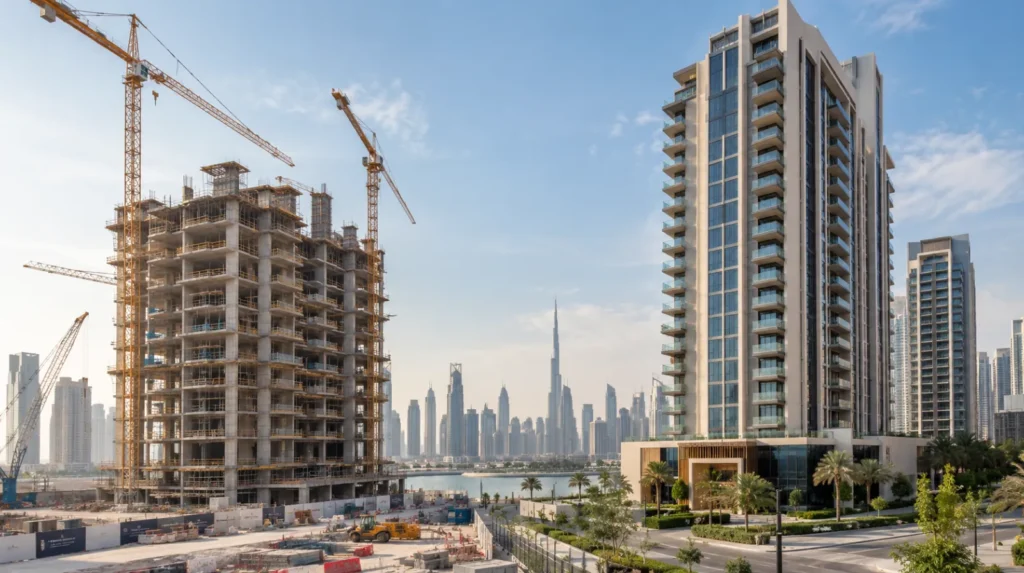
Buying a property in Dubai is only the first part of the investment decision. What happens after the purchase can be just as important.
Many investors focus heavily on the acquisition stage: the area, developer, purchase price, payment plan, escrow account, handover date and expected ROI. These factors matter. But once the property is ready, the investor must make another strategic decision:
Should the property be rented short-term or long-term?
This decision can affect income, net yield, occupancy, furnishing cost, management effort, maintenance, tenant stability, cash flow, compliance and even resale value.
Some investors assume short-term rental is always more profitable because nightly rates can be higher. Others assume long-term rental is always safer because it offers stable income. Both views are too simple.
The right rental strategy depends on the property type, location, building rules, furnishing budget, management capacity, seasonality, investor involvement, and long-term investment objective.
A good investor does not ask only, “Which rental model makes more money?”
A better question is:
“Which rental model creates the best risk-adjusted return for this specific property?”
Key Takeaways
Short-term rental can generate higher gross income in the right area, but it usually requires furnishing, permits, active management, cleaning, dynamic pricing and higher maintenance control.
Long-term rental can provide more stable cash flow, lower operational intensity and clearer tenant structure, but it may offer less flexibility and sometimes lower gross income.
Net yield matters more than headline income. Investors should calculate income after service charges, maintenance, furnishing, management fees, vacancy and compliance costs.
The right rental strategy should be decided before buying the property, not after handover.
A property that works well for short-term rental may not be the best long-term rental asset, and a property with stable long-term tenant demand may not be ideal as a holiday home.
Why Rental Strategy Matters Before You Buy
Rental strategy should influence the purchase decision from the beginning.
A buyer who wants short-term rental income should look for areas with tourism demand, business travel, strong accessibility, lifestyle appeal, views, attractions, and buildings that allow holiday-home operations.
A buyer who wants long-term rental income should focus on tenant stability, community living, access to offices or schools, transport, parking, building quality, service charges and demand from residents.
The same property may perform differently under each rental model.
For example, a furnished one-bedroom apartment in a prime tourist or business district may perform well as a short-term rental if it is managed professionally. A townhouse in a family community may perform better as a long-term rental because families usually prefer stability, schools, space and community facilities.
This is why rental strategy should not be treated as an afterthought.
It should shape the area, property type, furnishing plan, financing model and ROI calculation before the buyer signs.
What Is Short-Term Rental in Dubai?
Short-term rental usually refers to renting a property for short stays, often to tourists, business travelers, temporary residents or visitors. In Dubai, this is often connected to the holiday-home model.
Short-term rental can be attractive because nightly or weekly rates may be higher than the equivalent long-term rental rate. During peak seasons, major events or strong tourism periods, income can increase significantly.
However, short-term rental is an operational business, not a passive lease.
The owner must consider holiday-home permits, furnishing, professional photography, listing management, guest communication, cleaning, check-in and check-out, pricing, maintenance, reviews and compliance.
This model can work well for investors who understand hospitality-style operations or who appoint a professional property management company.
It is not suitable for every owner or every property.
What Is Long-Term Rental in Dubai?
Long-term rental usually refers to leasing a property to a tenant for a longer fixed period, often through a tenancy contract registered through Ejari.
This model is generally more stable and less operationally demanding. The tenant usually occupies the property for a longer period, and the owner receives rental income according to the tenancy agreement.
Long-term rental may be attractive for investors who want predictable cash flow, lower management intensity and fewer day-to-day responsibilities.
It can be particularly suitable for residential communities with strong demand from professionals, families, and long-term residents.
However, long-term rental also has limitations. The owner has less flexibility to use the property personally. Rental increases are subject to market rules and index-based considerations. If the rent is below market, the owner may not be able to adjust it freely overnight. Tenant management and maintenance responsibilities still exist.
Long-term rental is usually more stable, but not always more profitable.
Short-Term Rental: Main Benefits
The first potential benefit of short-term rental is higher gross income. A well-located, well-furnished property can sometimes generate more annual income from short stays than from a standard long-term lease.
The second benefit is flexibility. Owners may use the property personally during selected periods and rent it out when they are not using it.
The third benefit is market responsiveness. Rates can be adjusted based on seasonality, events, holidays, demand and occupancy.
The fourth benefit is diversification of tenant exposure. Instead of relying on one tenant for a full year, the owner earns from multiple guests.
The fifth benefit is potential appeal for properties in tourist-heavy or premium lifestyle areas.
Short-term rental may be especially relevant for apartments in areas with strong visitor demand, good transport access, waterfront appeal, business activity or tourism infrastructure.
But higher gross income does not automatically mean higher net yield.
Short-Term Rental: Main Risks and Costs
Short-term rental has higher operational requirements.
The property must usually be furnished to a high standard. The owner may need to invest in furniture, appliances, décor, linens, kitchenware, smart locks, internet, photography and guest-ready setup.
There are also recurring costs: cleaning, laundry, utilities, guest support, maintenance, platform fees, management fees and replacement of damaged items.
Vacancy risk is also different. Short-term rental income may be seasonal. The property may perform well during high-demand months and underperform during quieter periods.
Competition can also be intense. If many similar units are available in the same area, the owner may need stronger pricing, furnishing and reviews to stay competitive.
Short-term rental also requires compliance. In Dubai, holiday homes must be registered and approved before listing. This means the investor should understand the regulatory process before assuming the unit can be operated as a short-term rental.
The biggest mistake is comparing short-term gross revenue with long-term rent without subtracting operational costs.
Long-Term Rental: Main Benefits
The main benefit of long-term rental is stability.
Once a suitable tenant is secured, the owner may receive predictable income for the duration of the tenancy contract. This can make cash flow planning easier.
Long-term rental usually requires less frequent management compared with short-term rental. There are fewer check-ins, fewer cleanings, fewer guest communications and less daily pricing management.
The property may also experience less turnover. A good tenant who renews can reduce vacancy and marketing costs.
Long-term rental can be suitable for overseas investors who want a more passive structure and do not want to manage hospitality-style operations.
It may also be suitable for larger apartments, villas and townhouses in family communities where tenants prefer longer-term stability.
Long-Term Rental: Main Risks and Limitations
Long-term rental has its own risks.
If the rent is set too low, the owner may lose income potential. If the tenant does not renew, the property may face vacancy. If the tenant causes damage or delays payment, the owner may need to manage disputes or repairs.
The owner also has less flexibility. If the property is leased, the owner cannot easily use it personally whenever they want.
Rental increases may be affected by regulatory frameworks and market index references. This means landlords should not assume they can increase rent freely each year.
Long-term rental can also produce lower gross income than short-term rental in prime areas, especially if the property could perform well as a holiday home.
However, lower gross income may still be acceptable if net income is stable and operational costs are lower.
Gross Income vs Net Yield
The most important comparison between short-term and long-term rental is not gross income.
It is net yield.
Gross rental yield is calculated as:
Annual Rent ÷ Purchase Price × 100
Net rental yield is more realistic:
Annual Rent – Annual Expenses ÷ Purchase Price × 100
For long-term rental, expenses may include service charges, maintenance, property management, vacancy allowance and insurance.
For short-term rental, expenses may include all of the above plus furnishing, utilities, cleaning, linen, platform fees, guest support, dynamic pricing tools, higher maintenance, permit-related costs and professional management.
For example, a property may generate AED 120,000 in annual short-term gross revenue compared with AED 95,000 in long-term rent. At first glance, short-term looks better.
But if short-term operating expenses are AED 35,000 and long-term expenses are AED 15,000, the comparison changes.
Short-term net income: AED 85,000
Long-term net income: AED 80,000
In this example, short-term still performs slightly better, but it requires more management, more operational risk and more involvement.
In another property, after expenses and vacancy, long-term rental may produce stronger risk-adjusted returns.
This is why investors should calculate net yield, not just headline income.
Permit, Ejari and Compliance Considerations
Compliance is an important part of rental strategy.
Short-term rentals generally require holiday-home registration and approval before the property is listed. Investors should check whether the property type, building and operational setup are suitable before planning a holiday-home strategy.
Long-term rentals usually involve a tenancy contract and Ejari registration. Ejari helps formalize the rental agreement and is connected to Dubai’s rental system.
The investor should understand the difference between these two structures before choosing the model.
For long-term rental, the owner should consider tenancy terms, rent payment structure, renewal process, maintenance responsibilities and rental index implications.
For short-term rental, the owner should consider permit requirements, guest registration, building rules, management requirements and operational compliance.
A property investor should never assume that any unit can be rented in any way.
The rental model must be legally and practically suitable for the property.
Which Areas Work Better for Short-Term Rental?
Short-term rental often works better in areas with strong visitor demand.
These may include locations close to beaches, landmarks, business districts, event venues, shopping destinations, tourist attractions, waterfront areas and major transport links.
Apartments generally tend to be more practical for short-term rental than villas because they are easier to furnish, maintain, clean and manage. However, premium villas can work in specific luxury short-stay segments if the property is unique and professionally managed.
Investors should look for:
Tourist demand
Business travel demand
Easy access
Strong building facilities
Attractive views
Walkability
Nearby entertainment
High-quality furnishing potential
Building suitability
Professional management availability
Not every popular area is equally profitable. The building, unit view, floor, layout and guest experience also matter.
A short-term rental property should be selected like a hospitality asset, not only a real estate unit.
Which Properties Work Better for Long-Term Rental?
Long-term rental often works well in areas with strong resident demand.
This includes communities near offices, schools, transport links, retail, parks, healthcare, and established lifestyle infrastructure.
Studios and one-bedroom apartments may attract professionals and singles. Two-bedroom apartments may attract couples, small families or shared tenants. Villas and townhouses may attract families looking for space and stability.
Investors should look for:
Stable tenant demand
Reasonable service charges
Good maintenance
Practical layouts
Parking
Community facilities
Access to schools or offices
Long-term resident appeal
Lower vacancy risk
Resale liquidity
A long-term rental property should be easy to live in, not only attractive in photos.
Functionality matters.
Furnishing Strategy
Furnishing is one of the biggest differences between short-term and long-term rental.
Short-term rentals usually require full furnishing. The quality of furnishing affects guest reviews, nightly rates and occupancy. Poor furnishing can reduce performance even in a good location.
Long-term rentals can be furnished or unfurnished. Some tenants prefer furnished units, while others prefer to bring their own furniture, especially families or long-term residents.
The investor should calculate furnishing cost before buying.
Questions to ask:
Will furnishing increase rent enough to justify the cost?
How often will furniture need replacement?
Will the target tenant or guest expect premium quality?
Is the property suitable for furnished rental?
Will the unit be managed professionally?
Furnishing can improve income, but it is also a cost and maintenance responsibility.
Property Management
Short-term rental usually requires more active management.
The owner may need a holiday-home operator or property manager to handle listings, pricing, guest communication, cleaning, maintenance, reviews and compliance.
Long-term rental may require less frequent management, but overseas owners may still need help with tenant sourcing, inspections, rent collection, maintenance and renewals.
Management cost should always be included in net yield.
A self-managed property may look more profitable on paper, but it may create stress and inefficiency for overseas investors.
Professional management can reduce net income, but it can protect performance and save time.
How Rental Strategy Affects Exit Value
Rental strategy can also affect resale.
A property with strong rental income may attract investors. A property with stable long-term tenancy may appeal to buyers who want immediate income. A property with strong short-term rental performance may appeal to investors looking for hospitality-style returns.
However, buyers should be careful.
Short-term rental performance may depend heavily on management quality, reviews, furnishing and seasonality. A future buyer may not value the income unless it is well-documented.
Long-term rental income may be easier to understand, but if the rent is below market or the tenancy terms are restrictive, it may affect resale flexibility.
Before choosing a rental model, investors should think about the eventual buyer.
Who will buy this property from me later?
An end-user?
A rental investor?
A holiday-home operator?
A family?
A foreign buyer?
The rental strategy should support the exit strategy.
Final Checklist for Investors
Before choosing short-term or long-term rental, investors should ask:
Is the property in a short-term-friendly location?
Is holiday-home registration possible?
Does the building allow the intended use?
What furnishing level is required?
What are the expected operating costs?
What is the realistic occupancy rate?
What is the long-term rental value?
What are the service charges?
What is the expected net yield?
How much management is required?
Is the investor overseas or locally available?
Does the strategy support resale?
Does the property fit the investor’s risk tolerance?
The right rental strategy is not only about income.
It is about income after cost, effort and risk.
Final Thought
Short-term and long-term rental can both work in Dubai.
Short-term rental may offer higher gross income and flexibility, but it requires permits, furnishing, active management and stronger operational control.
Long-term rental may offer more stable income and lower management intensity, but it may generate lower gross income and less flexibility.
The best strategy depends on the specific property, location, investor goal and risk profile.
For some investors, short-term rental is the stronger option. For others, long-term rental is more stable and suitable. For many, the right answer should be decided before the property is purchased.
A smart investor does not buy first and decide later.
A smart investor buys with the rental strategy already in mind.
Because in real estate, return is not created only at purchase.
It is created through the way the asset is managed after purchase.