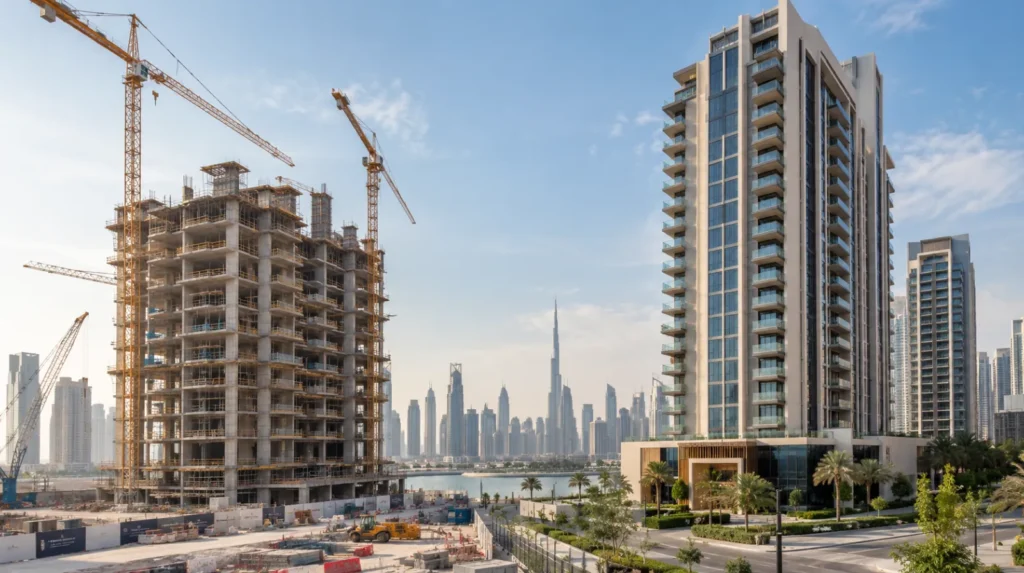
If you own property in Dubai but live abroad, the biggest mistake is assuming that ownership can stay passive after the purchase. In reality, overseas ownership works best when operations are structured properly. The practical rule is simple: outsource execution, but do not outsource visibility. A good management setup should handle leasing, tenant coordination, and routine admin for you, while you still track rent status, service charges, contract registration, and property-level performance.
Key Takeaways
- Dubai has a formal framework for real estate management contracts, and management companies can register or renew those contracts through Ejari.
- Dubai Land Department provides public tools to view management companies and JOP management companies.
- Dubai REST gives owners a practical dashboard for prices, rental index, sale index, service charges, and other owner-side services.
- Ejari remains central for lease administration, so overseas owners should still know whether tenancy contracts are being properly registered and renewed.
- Service charges are a real ownership cost and should be monitored, not just assumed.
- The best overseas setup is not “fully hands-off.” It is well-delegated but well-tracked.
Why Overseas Investors Need a Different Management Mindset
A local owner can visit the unit, follow up with brokers directly, and respond quickly when something changes. An overseas owner usually cannot. That makes property management more than convenience. It becomes part of protecting the asset.
A practical overseas-management model usually needs to cover three things:
- execution on the ground
- visibility for the owner
- clear accountability between the two
Without that structure, distance turns small issues into expensive ones.
What You Should Usually Outsource
For most overseas investors, outsourcing day-to-day execution makes sense. The goal is not to hand over control blindly. The goal is to avoid trying to run a Dubai property manually from another country.
| Function | Usually worth outsourcing? | Why |
| Tenant coordination | Yes | Requires local response and follow-up |
| Lease administration | Usually yes | Ejari and renewal timing matter |
| Routine property oversight | Yes | Problems are easier to solve locally |
| Basic rent collection coordination | Often yes | Easier through structured local handling |
| Strategic decisions | No | Should stay with the owner |
The biggest mistake is outsourcing judgment together with administration. Routine actions can be delegated. Investment decisions should not be.
What You Should Never Stop Tracking Yourself
A remote owner should not try to manage every daily step, but there are a few things that should always stay visible.
At a minimum, overseas investors should track:
- whether the unit is occupied or vacant
- whether the tenancy contract is registered and current
- current rent level and renewal timing
- service charges
- any unusual maintenance or legal issue
- whether the property still fits the original investment strategy
This is where Dubai REST becomes useful. It is not only a market app. For owners, it functions much more like an ownership-control tool.
What Dubai’s Official Systems Help You Monitor
Dubai gives owners more official oversight tools than many markets do. That is especially useful for overseas investors because it reduces the need to depend only on verbal updates.
| Official tool | What it helps you monitor |
| Dubai REST | Rental index, sale index, service charges, owner-side services |
| Ejari | Lease registration and renewal status |
| Service Charge Index | Approved charges for jointly owned properties |
| Management Companies list | Whether the manager exists within the official system |
This matters because good management is not only about trust. It is also about verifiability.
What a Good Property Manager Should Actually Handle
A management company is not just there to “watch the unit.” A useful manager should reduce friction and keep the asset operational.
A good property manager should usually help with:
- lease administration and renewal follow-up
- tenant communication
- move-in and move-out coordination
- maintenance handling
- document coordination
- reporting back to the owner clearly and on time
If the manager is doing a lot of talking but very little reporting, that is usually a warning sign.
What Overseas Owners Should Expect From the Relationship
One useful fact in Dubai’s system is that the management contract itself can be formally registered. That means the relationship between the owner and the management company does not need to stay informal.
That is important because a strong overseas-management setup should answer basic questions clearly:
- Who is allowed to do what?
- What needs owner approval?
- What gets reported automatically?
- What happens when the tenant defaults, delays, or leaves?
- What is included in the management scope, and what is not?
A remote owner should expect clarity, not just availability.
The Most Common Mistakes Overseas Investors Make
Most ownership problems do not start with fraud or major disputes. They start with weak structure.
The most common mistakes are:
- choosing a manager without checking official standing
- outsourcing everything and tracking nothing
- not checking whether tenancy paperwork is being handled properly
- ignoring service charges until they become a surprise
- focusing on rent collected but not on total property performance
A property can look “managed” while still being poorly monitored.
A Simple Way to Build a Better Setup
If you want a practical overseas-management model, keep it simple:
- Use a properly structured local management setup
- Make sure the scope is clear
- Keep owner visibility through official tools
- Review performance regularly, not emotionally
- Treat management as part of the investment, not as an afterthought
That approach usually works better than trying to be fully hands-on from abroad or fully absent from the process.
Final Thought
For overseas investors in Dubai, good property management is not about disappearing from the asset. It is about staying in control without handling every operational detail yourself. The best setup usually combines local execution with owner visibility: outsource the workload, keep the oversight, and use Dubai’s official systems to verify what is really happening on the ground.